Showing posts with label Mechanical Engineering. Show all posts

Saturday, June 4, 2011

Vernier Calliper

The meter scale enables us to measure the length to the nearest millimeter only. Engineers and scientists need to measure much smaller distances accurately. For this a special type of scale called Vernier scale is used.


Vernier Calliper

The Vernier scale consists of a main scale graduated in centimeters and millimeters. On the Vernier scale 0.9 cm is divided into ten equal parts. The least count or the smallest reading which you can get with the instrument can be calculated as under:

Least count = one main scale (MS) division - one vernier scale (VS) division.

= 1 mm - 0.09 mm

= 0.1 mm

= 0.01 cm

The least count of the vernier

= 0.01 cm

The Vernier calliper consists of a main scale fitted with a jaw at one end. Another jaw, containing the vernier scale, moves over the main scale. When the two jaws are in contact, the zero of the main scale and the zero of the vernier scale should coincide. If both the zeros do not coincide, there will be a positive or negative zero error.

After calculating the least count place the object between the two jaws.

Record the position of zero of the vernier scale on the main scale (3.2 cm in figure below).


Principle of Vernier

You will notice that one of the vernier scale divisions coincides with one of the main scale divisions. (In the illustration, 3rd division on the vernier coincides with a MS division).

Reading of the instrument = MS div + (coinciding VS div x L.C.)

= 3.2 + (3 x 0.01)

= 3.2 + 0.03

= 3.23 cm

To measure the inner and outer diameter of a hollow cylinder or ring, inner and outer callipers are used. Take measurements by the two methods as shown in figure below.

www.tutorvista.com/

Saturday, April 2, 2011

What is Electrical Mechanical Energy?

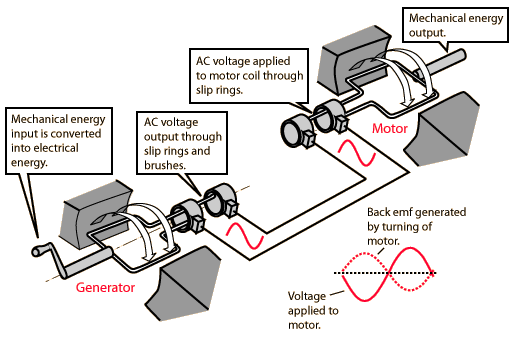
Electrical mechanical energy can be created in one of two ways: using an electric generator or a motor. The concept of electric generator is used to describe a number of devices that convert mechanical energy into electricity. A motor converts electrical energy into mechanical, that is the reverse process of the electrical generator. The energy can be used for a variety of purposes, by a large electric power plant, to be the motor of an electric car use.

It is important to note that there is no such thing as free energy. All energy must be created by something and need a resource. Some type of device is needed to translate the energy from one form to another. For example, solar energy requires the use of solar collectors to trap the sun's rays and convert the heat into electrical energy. This rule applies to electrical and mechanical energy.

An electric generator uses electromagnetic induction to convert mechanical energy into electricity. Mechanical energy is produced by a wind turbine, a hand crank or turbine steam engine. The generator was designed to absorb energy as it is created by the mechanical fastening. The mechanical energy moves the turbine blades, generally against the direction of the magnetic force. This movement generates electromagnetic energy.

The engine is to convert electrical energy into mechanical energy. The electrical energy is produced by the engine, then mechanical energy is created, received by the rotor. This process is the exact opposite of mechanical energy, but has many of the same elements.


Both a generator or motor has a rotor and a stator. A rotor is the actual rotating part of an alternator, generator or motor. The stator is the stationary part, the rotor in position. The anchor is actually produced electric current in the generator and is either built into the rotor or stator. The magnetic field is created by a magnet on the rotor or stator.

Electrical mechanical energy is a common source of power for large power plants and other mechanical equipment. Electrical energy is in high demand, and this constant demand requires the development of new, more efficient forms of exploitation of the electrical mechanical energy. High voltage energy can not be saved, but have available upon request. A career in electrical engineering or mechanical engineering is about the use of this energy source in a variety of designs centered. The positions are devices in electric power generation stations, substations and related.

source:wisegeek.com

Friday, March 18, 2011

Mechanical Engineering Heritage (Japan)

The Mechanical Engineering Heritage (Japan) (????, kikaiisan?) is a list of sites, landmarks, machines, and documents that made significant contributions to the development of mechanical engineering in Japan. Items in the list are certified by the Japan Society of Mechanical Engineers (JSME) (??????, Nihon Kikai Gakkai?).

The Mechanical Engineering Heritage program was inaugurated in June 2007 in connection with the 110th anniversary of the founding of the JSME. The program recognizes machines, related systems, factories, specification documents, textbooks, and other items that had a significant impact on the development of mechanical engineering. When a certified item can no longer be maintained by its current owner, the JSME acts to prevent its loss by arranging a transfer to the National Science Museum of Japan or to a local government institution.

The JSME plans to certify approximately a hundred items of high heritage value over ten years.
Categories

Items in the Mechanical Engineering Heritage (Japan) are classified into four categories:

1. Sites: Historical sites that contain heritage items.
2. Landmarks: Representative buildings, structures, and machinery.
3. Collections: Collections of machinery, or individual machines.
4. Documents: Machinery-related documents of historical significance.

Each item is assigned a Mechanical Engineering Heritage number.

Items certified in 2007

* No. 1: Steam engines and hauling machinery at the Kosuge Ship Repair Dock, (built in 1868). - Nagasaki Prefecture


* No. 2: Memorial workshop and machine tools at Kumamoto University, (built in 1908). - Kumamoto Prefecture

Collections
* No. 3: Forged iron treadle lathe (made in 1875 by Kaheiji Ito). - Aichi Prefecture
* No. 4: Industrial steam turbine (Parsons steam turbine), (made in 1908). - Nagasaki Prefecture
* No. 5: 10A rotary engine (made in 1967). - Hiroshima Prefecture
* No. 6: Honda CVCC engine (first engine to meet emission standards of Clean Air Act (1970)). - Tochigi Prefecture

* No. 7: FJR710 jet engine (made in 1971). - Tokyo
* No. 8: Yanmar small horizontal diesel engine, Model HB (made in 1933). - Shiga Prefecture
* No. 9: Prof. Inokuchi's centrifugal pump, (made in 1912). - Aichi Prefecture
* No. 10: High frequency generator (made in 1929 by German AEG). - Aichi Prefecture
* No. 11: 0-Series Tokaido Shinkansen electric multiple units (operated 1964–1978). - Osaka
Prefecture

* No. 12: Class 230 No.233 2-4-2 steam tank locomotive (made 1902–1909). - Osaka Prefecture
* No. 13: YS11 passenger airplane (flown 1964–2009). - Tokyo
* No. 14: Cub Type F, Honda bicycle engine (1952). - Tochigi Prefecture
* No. 15: Chain stitch sewing machine for the production of straw hats (made in 1928). - Aichi

Prefecture

* No. 16: Non-stop shuttle change automatic loom, Toyoda Type G (made in 1924). - Aichi Prefecture
* No. 17: Hand operated letterpress printing machine (made in 1885). - Tokyo
* No. 18: Komatsu bulldozer G40 (made in 1943). - Shizuoka Prefecture
* No. 19: Olympus gastrocamera GT-I (made in 1950). - Tokyo
* No. 20: Buckton[1] universal testing machine (installed in 1908). - Hyogo Prefecture
* No. 21: Mutoh Drafter manual drafting machine, MH-I (made in 1953). - Tokyo
* No. 22: Myriad year clock, (made in 1851). - Tokyo
* No. 23: The Chikugo River Lift Bridge (opened in 1935). - Between Fukuoka and Saga

Prefecture

Documents

* No. 24: JSME publications from the early days of the society, (published in 1897, 1901 and 1934). - Tokyo
* No. 25: "Hydraulics and Hydraulic Machinery", lecture notes by Professors Bunji Mano and Ariya Inokuchi at Imperial University of Tokyo (1905). - Tokyo

Items certified in 2008

* No. 26: Sankyozawa hydroelectric power station and related objects, (operating since 1888). - Miyagi Prefecture
* No. 27: Hydraulic lock (made in United Kingdom, operating since 1908) and floating steam crane (operated 1905–2008), Miike Port. - Fukuoka Prefecture

Collections

* No. 28: “Entaro” bus (Ford TT type), (1923, adapted from chassis imported from United States). - Saitama Prefecture
* No. 29: Mechanical telecommunication devices (made in 1947 by Shinko Seisakusho Co.). - Iwate Prefecture
* No. 30: Mechanical calculator, (Yazu Arithmometer, patented in 1903). - Fukuoka Prefecture[2]
* No. 31: Induction motor and design sheet (made in 1910, in the earliest days of the Japanese electrical machinery industry). - Ibaraki Prefecture

Items certified in 2009

* No. 32: Mechanical Device of Sapporo Clock Tower, (clock mechanism imported/installed from E. Howard & Co. in 1881, moved in 1906). - Hokkaido
Landmarks

* No. 33: Minegishi Watermill, (installed in 1808, in operation till 1965). - Tokyo
Collections

* No. 34: The Master Worm Wheel of the Hobbing Machine HRS-500, (machining by Hobbing machine of Rhein-Neckar from Germany in 1943). - Shizuoka Prefecture
* No. 35: Locomobile, The oldest private Steam Automobile in Japan, (one of eight imported from Locomobile Company of America in 1902, failured in 1908, discovered in 1978 then only boiler was replaced and operable in 1980). - Hokkaido
* No. 36: Arrow-Gou, The oldest Japanese-made Car, (one of Japanese fundamental vehicle technology made in 1916). - Fukuoka Prefecture
* No. 37: British-made 50 ft Turn Table, (imported from Ransomes & Rapier made in 1897, but installed location was unknown before moved in 1941 then further moved to Oigawa Railway in 1980, in operation. Two others are deemed also imported and still in operation in other locations, these historical details is not known). - Shizuoka Prefecture

Items certified in 2010
Landmarks

* NO. 38: Carousel El Dorado of Toshimaen, the oldest in Japan and oldest class in worldwide, produced by Hugo Haase (German, 1857-1933) in 1907, travelled in Europe, then moved to Steeplechase Park of Coney Island, New York in 1911, operated till 1964, then purchased, refurbished and operate in Toshimaen (?????, Toshimaen?) since 1971. - Tokyo[3][4]
* No. 39: Revolving stage and its slewing mechanism of old Konpira Grand Theatre. - Kagawa

Prefecture

Collections

Electric vehicle TAMA, Heritage No. 40.

* No. 40: Electric vehicle TAMA (E4S-47 I), produced by Tachikawa Aircraft Company Ltd in 1947, to overcome oil shortage after World War II. The car is with single motor of 36V, 120A, run 65km by single charge, max. speed 35km/h. The second model in 1949 run 200km. Used as taxi in Tokyo. Production had quitted due to cost up of battery by Korean War. - Kanagawa Prefecture
* No. 41: The first made in Japan forklift truck with internal combustion engine, max. load 6,000 pound, in 1949, learned from Clark Material Handling Company's 4,000 pound type. - Shiga Prefecture
* No. 42: Takasago and Ebara type Centrifugal Refrigerating machine. - Kanagawa Prefecture
* No. 43: Automated Ticket Gate (Turnstile), OMRON and Kintetsu jointly studied from 1964, model PG-D120 operated from 1973 after prototype evaluation from 1967. - Kyoto Prefecture

source:wikipedia.com

Monday, February 28, 2011

What is mechanical engineering?

Mechanical engineering is a broad topic that is the width of the necessity, design and manufacture everything from small parts and devices (eg sensors and micro-inkjet nozzles) to large systems (eg, space vehicles and machine tools). The role of mechanical engineer is a product from an idea to take to the market. To achieve this, a broad range of skills are required. The machine builder must acquire special skills and knowledge. He / she has the strength and the thermal environment to understand that a product, its parts or its subsystems deal; them for functionality, aesthetics, and the ability to withstand the forces and the thermal environment, they are subject design; and to determine the best way to manufacture them and ensure that they operate without failure. Maybe this is a skill that the machine builder's exclusive domain is the ability to analyze and design objects and systems with motion.

Since these capabilities for almost all that is necessary are, mechanical engineering is perhaps the broadest and most diverse of the engineering disciplines. Mechanical engineers play a central role in such industries as automotive (from the chassis of the vehicle, its every subsystem engine, transmission, sensors), aerospace (aircraft, aircraft engines, control systems for aircraft and space vehicles), Biotechnology (implants, prostheses, fluid control systems for the pharmaceutical industry), computers and electronics (drives, printers, cooling systems, semiconductor tools), micro-electromechanical systems or MEMS (sensors, actuators, micro power generation), energy conversion (gas turbines, wind turbines, solar energy, fuel cells), environmental control (HVAC, air conditioning, refrigeration, compressors); automation (robots, data and image capture, recognition, control), manufacturing (machining, machine tools, prototyping, microfabrication).


To put it simply, mechanical engineering is concerned with everything that moves, including the human body, a very complex machine. Mechanical engineers study materials, solid and fluid mechanics, thermodynamics, heat transfer, control, instrumentation, design and production of mechanical systems to understand. Specialized mechanical engineering topics include biomechanics, cartilage tissue engineering, energy conversion, laser-assisted materials processing, combustion, MEMS, microfluidic systems, fracture mechanics, nano mechanics, mechanisms, micro power generation, tribology (friction and wear) and vibration. The American Society of Mechanical Engineers (ASME) currently lists 36 technical departments, from Advanced Energy Systems and Aerospace Engineering from solid waste engineering and textile technology.

The width of the mechanical engineering discipline allows students a variety of career possibilities beyond some of the above mentioned industries. Regardless of the way they imagine for themselves after graduation, their training, they are mixed with the creative thinking that they remove to an exciting product or system, the analytical tools, their design goals, the ability, all the difficulties have made to achieve design makes available, and the team work for the design, manufacture and marketing of a system. These valuable skills could also pursue a career in medicine, law, consulting, management, banking, finance and so on.

For those interested in applied scientific and mathematical aspects of the discipline, graduate studies in engineering can lead to a career in research and teaching.

Friday, January 21, 2011

Engineering Fun Facts

1.The word engineering is derived from the Latin word ingeniere which means ingenious.

2.The Newgrange chamber tomb is one of the oldest and most impressive engineering structures in Irish history. It was built in 3200 BC - 600 years before the Great Pyramid of Giza in Egypt.

3.In 1833, William Dargan from County Carlow constructed the first railway from Dublin to Dun Laoghaire
4.In 1884, John Joly from Holywood House, Bracknagh, Co. Offaly invented the first practical system of colour photography.


5.In 1893, the first Ferris Wheel was built by engineer George W. Ferris


6.In 1906, Alice Perry was the first woman in the world to graduate with a degree in engineering. She received her qualifications from Queens College, Galway (now N.U.I. Galway).


7.In 1907, Louis Brennan of Castlebar, Co. Mayo designed Ireland’s first monorail.


8.In 1909, Harry Ferguson made the first powered aeroplane flight in Ireland, travelling 130yards (118.5 m) at Hillsborough in a monoplane that he designed and built himself.


9.In 1944, James Martin of Co. Down invented the aircraft ejector seat.


10.On 3rd December 1992, Neil Papworth, a British engineer, sent the first successful text message to his colleagues at Vodafone; it said: “Merry Christmas”


11.Three major engineering inventions were created in Birr, Co. Offaly

World's largest telescope,Steam turbine,World's first steam turbine powered ship

12.Croke Park is the 4th largest stadium in the world


13.Peter Rice from Dundalk Co. Louth was one of the engineers who oversaw the construction and design of the Sydney Opera House - one of the world’s finest engineering structures.


Source:step.ie (thanks)

Friday, January 7, 2011

Seawise Giant(The Longest Ship)

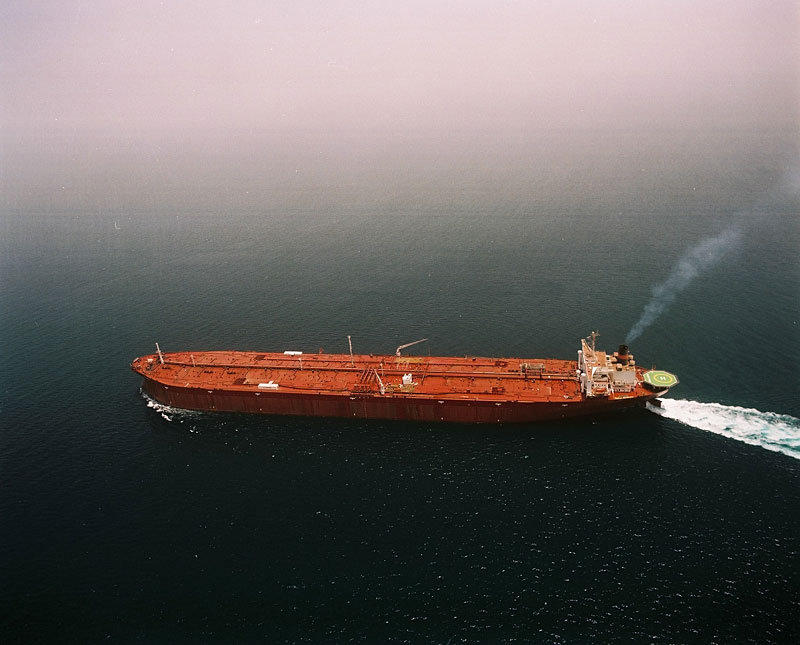
Seawise Giant, later the Happy Giant, Jahre Viking, and Knock Nevis, was a ULCC supertanker and the longest ship ever built, and possessed the greatest deadweight tonnage ever recorded. Fully laden, her displacement was 657,019 tonnes (646,642 LT; 724,239 ST), the heaviest ship of any kind, and with a draft of 24.6 m (81 ft), she was incapable of navigating the English Channel, the Suez Canal or the Panama Canal. Overall, she was generally considered the largest ship ever built. Additionally, she is considered to be the largest mobile man made object ever built. She was last used as a floating storage and offloading unit (FSO) moored off the coast of Qatar in the Persian Gulf at the Al Shaheen Oil Field.


The vessel was sold to Indian ship breakers, and renamed Mont for her final journey in December 2009. After clearing Indian customs, she was sailed to, and intentionally beached at Alang, Gujarat, India for demolition.

Seawise Giant was built in 1979 by Sumitomo Heavy Industries, Ltd. at their Oppama shipyard in Yokosuka, Kanagawa, Japan, and christened Oppama when the Greek owner failed to take delivery.

The shipyard exercised its right to sell the vessel and a deal was brokered with Hong Kong Orient Overseas Container Line founder C. Y. Tung to lengthen the ship by several metres and add 87,000 metric tons of cargo capacity through jumboisation. Two years later she was relaunched as Seawise Giant.


After the refit, the ship had a capacity of 564,763 metric tons deadweight (DWT), a length overall of 458.45 metres (1,504.1 ft) and a draft of 24.611 metres (80.74 ft). She had 46 tanks, 31,541 square metres (339,500 sq ft) of deck space, and drew too much water to pass through the English Channel.[5] The rudder weighed 230 tons, the propeller 50 tons.

The Seawise Giant was damaged during Iran–Iraq War by an Iraqi air force attack while transiting the Strait of Hormuz on 14 May 1988 and carrying Iranian crude oil. She sank and was declared a total loss.

Shortly after the Iran-Iraq war, Norman International bought the wreckage of the ship and repaired her. She was renamed "Happy Giant" after the repairs .These repairs were done at the Keppel Company shipyard in Singapore after towing her from the Persian Gulf. She entered service in October 1991 as the Happy Giant.


Jørgen Jahre bought the tanker in 1991 for US$39 million and renamed her Jahre Viking. From 1991 to 2004, she was owned by Loki Stream AS and flew the Norwegian flag.

In 2004, she was bought by First Olsen Tankers Pte. Ltd., renamed Knock Nevis, and converted into a permanently moored storage tanker in the Qatar Al Shaheen oil field in the Persian Gulf.

Knock Nevis was renamed Mont, and reflagged with Sierra Leone by her new owners Amber Development Corporation, for a single voyage to India in January 2010 where she was scrapped.Her 36 tonne anchor was saved and sent to the Hong Kong Maritime Museum for exhibition.

Seawise Giant was the longest ship ever constructed, longer than the height of many of the world's tallest buildings. Though slightly smaller than Taipei 101 at 509.2 metres (1,671 ft) and the Willis Tower at 527.3 metres (1,730 ft) from street level to top of antenna, she is larger than the Petronas Twin Towers at 452 metres (1,483 ft).

In spite of its great length, the Seawise Giant was not the largest ship by gross tonnage, ranking fifth at 260,941 GT, behind the four 274,838 to 275,276 GT Batillus-class supertankers. The Batillus class and the Seawise Giant were the largest self-propelled objects ever constructed.

Seawise Giant was featured on the BBC series, Jeremy Clarkson's Extreme Machines while she was under way as Jahre Viking. The captain claimed it could go 16 to 16 1/2 (29,6km/h) knots in good weather, that it took 8,000 meters (5 1/2 miles) to stop from that speed, and that the turning circle in clear weather was about two miles (3 km).


Source:Wikipedia


Thursday, October 21, 2010

Oil level controls for Parallel Compressor Systems

In the entire refrigeration system is a parallel compressor system of the most complex and important electromechanical device.
It is the one that will help in the provision of the cooling system, the food at all utilities and associated processing chambers in the cooling system.

This applies to both domestic and industrial refrigeration systems. The most common types of parallel compressor rack systems are the piston compressor screw compressor rack and racks.
For the piston compressor rack, it can either be assembled to a domestic institution or an industrial plant to be adjusted.

There is a wide range of condensing units running on the piston compressor that you are being offered themselves, it depends.
Screw compressor compressor parallel systems on the other side can be configured to fit together or even a domestic institution or an industrial plant provided.

Several companies, which openly with parallel compressor systems that they have the ability and power over the people flooded screw compressors, especially those for low temperature in any refrigeration system is used to admit.
A design has been adopted by ENEX eCO2 technology to specifically fit to Australia conditions in line with other forms of products geared to the high demand in the market. There are two main categories, which are basically targeting the retail refrigeration.

One of them is the multi-or single-compressor system, which has the ability to provide low, medium and high temperature cooling through the use of direct liquid CO2 expansion.
These cooling systems to operate in trans-critical mode or sub-critical mode and you do not need additional high level of system cooling.

In areas in New Zealand and Australia, these systems are economically and technically feasible, especially in non-tropical climates.

A number of the products are single-stage eCO2 MT racks, compound 2-step LT-rack and 2-step LT MT racks. How to know in general, a refrigerator comes in handy both nationally and in industries, mainly because the people on food and chemicals that should not be exposed to warm temperatures to enable business. Parallel compressor is discussed as part of a refrigerator used to be the most important above all because it applies even to air conditioning systems in public buildings, private homes, etc. Air

There are several uses of refrigerators in industries such as liquefied gases such as nitrogen, oxygen, methane and propane. In Preparation of compressed air is used to condense water vapor to reduce the moisture from the air.
It is a form of process that is maintained by cooling at chemical plants, refineries and petrochemicals. It is necessary for the cold in every form of everyday products such as poultry, beef and fish.

Since moving these products from one place to another, in the installed cooling systems have on vehicles, ships and planes have been installed to keep fresh on arrival. Parallel compressor systems can be replaced incase of any breakdown, but it is advisable to first determine at what could be wrong with your refrigerator prior to making decisions

Tuesday, October 19, 2010

Engineering Wonders of Today and Tomorrow

Eng_Wonders_main


Dubai’s World Islands

Eng_Wonders_1a(images via: Homes Dubai and Ursi Paltenstein)

Following on the successful completion of other offshore artificial island communities like the Palm Islands, Dubai’s World Islands was intended to be even more ambitious, not to mention larger. Imagine owning a private island in the shape of a country or continent, surrounded by the warm waters of the Persian Gulf – and your equally “worldly” neighbors?

Eng_Wonders_1b

Eng_Wonders_1x(images via: ESA and Amazing Dubai Islands)

While Dubai’s vision of a 300-island floating world may someday come to fruition, things aren’t so rosy at the moment thanks to the ongoing world economic crisis. As of late summer 2009 only a single island has been developed and it belongs to Dubai’s ruling Sheik; “the rest looks like a pile of muck” according to a local realtor. With property prices crashing by 50 to 75 percent, many of Dubai’s spectacular construction projects have been put on indefinite hold if not canceled outright.

Bering Strait Bridge

Eng_Wonders_2a(images via: Mr. James and William Bacon)

A bridge across the Bering Strait connecting Russia and Alaska? No, this is not a repeat from 11,000BC. OFF Architecture won the 2nd Prize in the Professional Category at the 2009 Bering Strait Project competition (yes, there is such a thing) with their grandiose and green bridge-tunnel combo. The design would greatly reduce circulation between the Arctic and North Pacific Oceans, thus cooling the former and mitigating the effects of global warming. Or so they say.

Eng_Wonders_2x(image via: Inhabitat)

The 53-mile wide Bering Strait is surprisingly shallow – it was a natural land bridge back in Ice Age times – so OFF Architecture’s design would reach from just above the water’s surface down to the ocean floor 100 to 150 feet below. Such a design would necessitate circular “pass throughs” for migrating marine mammals and whales. The thought of a whale having a panic attack inside one of the tunnels gives a whole new meaning to “Thar she blows!!”

Large Hadron Collider

Eng_Wonders_3a

Eng_Wonders_3b(images via: BBC, Discover Magazine and Device Daily)

The Large Hadron Collider, or LHC being built by CERN is without question the largest and most complex machine ever constructed by Man. It has to be – the universe doesn’t give up its deepest secrets very easily. The LHC is the world’s largest refrigerator, requiring 10,080 tons of liquid nitrogen and nearly 60 tons of liquid helium to bring the temperature of the collider’s huge electromagnets down to -271.3°C (1.9 Kelvin). Want more? The interior of the LHC’s ring tunnel is the emptiest place in the entire solar system – the machine’s particle beams will travel through an ultra-high vacuum with ten times less pressure than you’ll find on the Moon.

Eng_Wonders_3c

Eng_Wonders_3x(images via: Sun HPC)

Huge as it is, the LHC doesn’t look too impressive from the air since the actual 17-mile (27 km) tunnel lies buried an average 330 feet (100 meters) underground. It IS big however – part of the ring is in France; part is in Switzerland. Since this short blurb gives only a hint of the LHC’s workings, check out this Schoolhouse Rock style rap on the LHC from TeacherTube:

LHC Rap, via TeacherTube

Gotthard Base Tunnel

Eng_Wonders_4(images via: WTC 2013 and Popular Science)

The 95.3-mile (153.5 km) long Gotthard Base Tunnel network now being drilled out beneath the Alps, when finally completed in about ten years, will be the longest underground tunnel ever constructed. High-speed trains traveling at 155 mph (250 kph) will significantly reduce travel times between Zurich, Switzerland and Milan, Italy while at the same time relieving the bottleneck of commercial and passenger traffic now clogging existing mountain highways and train lines. Hannibal would most definitely approve.

Eng_Wonders_4x(image via: Railway Technology)

The most difficult portion of the tunnel is the 57 km (35.4 mi) stretch that will run nearly 2,000 feet (600 meters) under the Gotthard massif below the existing Gotthardbahn track. It’s estimated that 459 million cubic feet (13 million cubic meters) of crumbly, porous rock will have to be removed during the course of tunnel construction – that’s enough to fill the Great Pyramid of Giza five times over. In the above image, one of the huge tunnel-boring machines is shown just as it breaks through to one of the completed sections of the tunnel.

Japan-Korea Undersea Tunnel

Eng_Wonders_5(images via: InventorSpot)

Though the shovels have yet to shift any dirt, the blueprints are ready for construction to begin on one of Asia’s most momentous megaprojects: the Japan-Korea Friendship Tunnel. Or the Korea-Japan Friendship Tunnel – the fine details are still being discussed. Should the project get the nod from the politicos, work will begin on joining the southwestern Japanese city of Karatsu with the South Korean port of Busan with a 79-mile (128-km) train tunnel. The distance is more than three times that of the Anglo-French “Chunnel” but the technology is proven. As for North Korea’s take on the project, either Kim Jong Il hasn’t been told or everyone’s scared to bring up the subject.

The wags at Asiadog have put together a nifty video of what they refer to as the Korea < -> Japan Undersea Tunnel, backed by a bouncy beat:

Korea <-> Japan Undersea Tunnel, via Asiadog

Space Solar Power Station

Eng_Wonders_6(images via: Inhabitat, Treehugger and Pink Tentacle)

The challenges and difficulties involved in large-scale orbital construction projects are immense… yet someday they will be tackled as the demand for interplanetary spacecraft, space elevators and orbiting power stations becomes irresistible. The latter – a solar power station in geostationary orbit – is now on the drawing board and has been given a sky-high price tag of 2 trillion yen ($21 billion).

Eng_Wonders_6x(image via: Bloomberg)

The project, conceived by the Japanese government and industry researchers, will see a space-based solar power station built in orbit 22,360 miles (36,000 km) above the earth. The station will generate 1 gigawatt of power from sunlight and beam the energy down to a receiving station where it can be used to power almost 300,000 homes.

Terraforming Mars

Eng_Wonders_7a(images via: All These Worlds, Daily Galaxy and Electro-plankton)

The most extreme engineering project in the history of the world will be performed OFF the world… on Mars. A variety of schemes have been floated over the past few decades with the intent of making Earth’s nearest neighbor more amenable to life of the earthly variety – in other words, Terraforming. Naturally the scale is huge – comets may be redirected to impact the Red Planet to provide water for oceans, which would be seeded with algae in order to boost the oxygen content in the Martian atmosphere. Other schemes entail the placement of giant orbiting mirrors to focus sunlight upon Mars’ polar icecaps, thus releasing liquid water and gaseous carbon dioxide to kick-start a greenhouse effect.

Eng_Wonders_7b

Eng_Wonders_7x(images via: LA 2101 and WonderlandJACK)

Terraforming Mars is no pie-in-the-sky scheme; it could be the salvation of our species should our actions on Earth continue to reduce our home planet’s livability. It would be most fitting if someday, as predicted/depicted in The Million-Year Picnic, a short story from Ray Bradbury’s book The Martian Chronicles, this scene should take place: A father answers his children’s desire to see Martians by suggesting they look into the canal their boat is floating on… in which they view their own reflections.


Source:http://weburbanist.com/

Friday, October 15, 2010

SCHWERER GUSTAV

Maybe you can be surprised after seeing heading,
Schwerer Gustav is a rail gun which is developed by Krupp and which is used for destroying big targets.

[7.jpg]
[3.jpg]

Schwerer Gustav is designed in 1934 and it used between 1941-1945.It is weight approximately 1350 tons.It can throw 7 tons bullets from 37 km to target.It is used in Siege of Stalingrad.


[10.jpg]

[1.jpg]